About the Monument
The National WWI Memorial and the Harlem Highlighters: How Rory Clarke Became the Man in Bronze
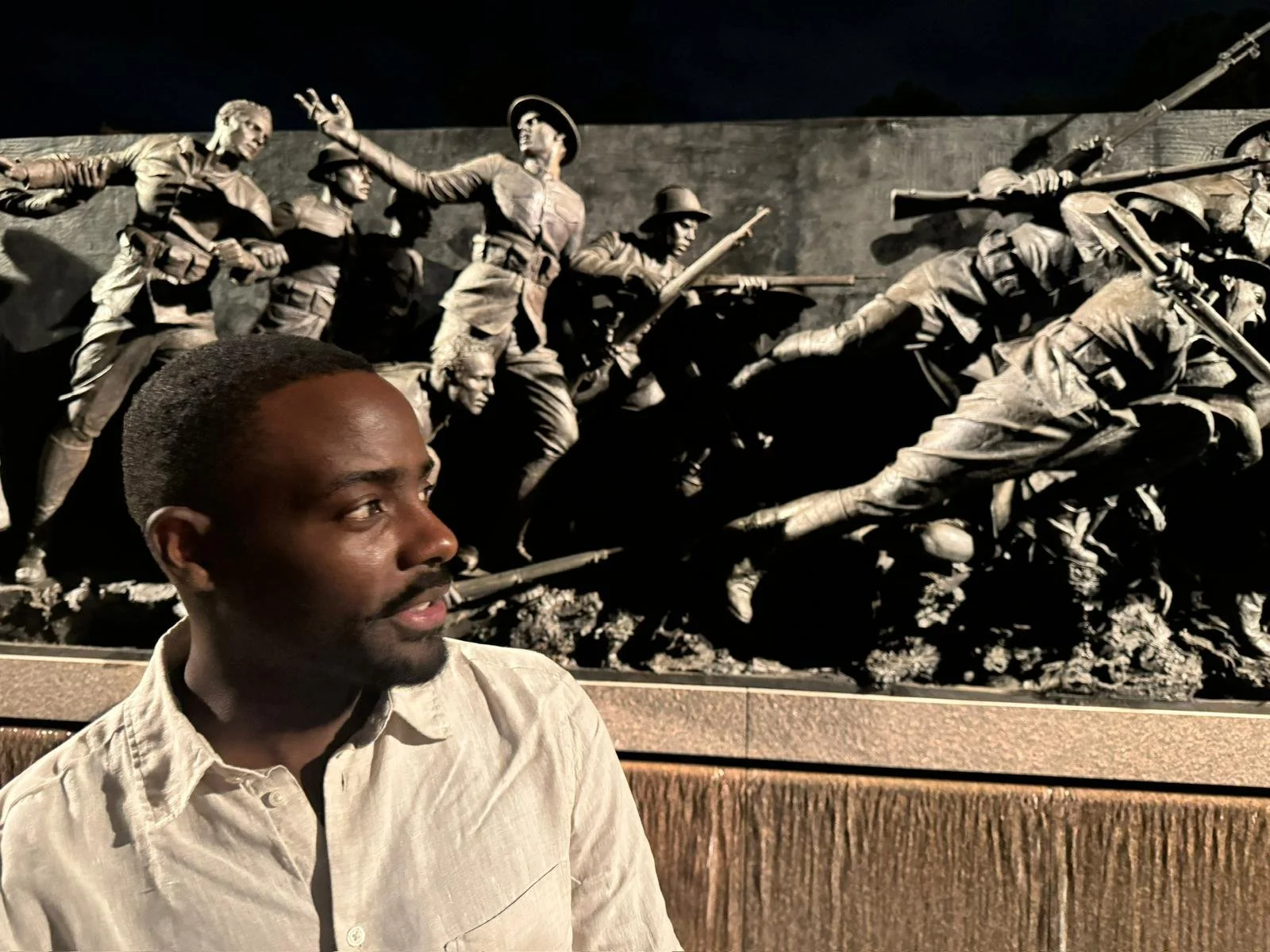
“Rory Clarke is the model cast in bronze in the National WWI Memorial in Washington, DC, representing the Harlem Hellfighters — and the writer, director, and star of the short film Henry Johnson.” -WTOP News, John Domen, September 20, 2024
The Memorial
The National World War I Memorial stands in Pershing Park, on Pennsylvania Avenue, a short walk from the White House. It is the last of the major war memorials to be built in the capital — dedicated more than a century after the armistice, to a war that had never had a national monument of its own in Washington.
At its center is “A Soldier's Journey”, a bronze sculpture by Sabin Howard: 38 figures across 58 feet, following a single soldier from the moment he leaves home through the fighting and back again. The sculpture was unveiled on September 13, 2024, after nearly a decade of design, modeling, casting, and installation.
Among those 38 figures are the Harlem Hellfighters — the soldiers of the 369th Infantry Regiment. Rory Clarke is the model for 3 of them.

WTOP News: Click here for the full Interview
The Harlem Hellfighters and Sgt. Henry Johnson
The 369th Infantry began as the 15th New York National Guard, a Black regiment raised in Harlem. When the American Expeditionary Forces would not put them into the line alongside white units, they were attached to the French Army and fought under French command — 191 days in the trenches, longer than any other American regiment, and they never gave up a foot of ground or lost a man to capture.
On the night of May 14–15, 1918, Private Henry Johnson was on sentry duty in the Argonne when a German raiding party attacked his post. Wounded, out of ammunition, and with his fellow sentry down, he fought on with his rifle butt and a bolo knife until the raiders withdrew. He carried 21 wounds home. France awarded him the Croix de Guerre with palm. His own country took 97 years: the Medal of Honor was awarded posthumously in 2015.
The regiment marched up Fifth Avenue to a hero's welcome in February 1919, and then went home to a country that had not changed. That is why a Hellfighter's figure in a national memorial matters. For a century, the memorial to these men was the parade. Now it is bronze, in the capital, permanently.
In 2016 Rory was catering events at the World Trade Center when Paul, a friend on the same crew, told him a sculptor was casting models for the National WWI Memorial. Paul had already sat for the studio and thought he had the build for it. Rory went in for a session at Sabin Howard's studio in the South Bronx and was scanned. Eight years later the figures were unveiled in Washington.
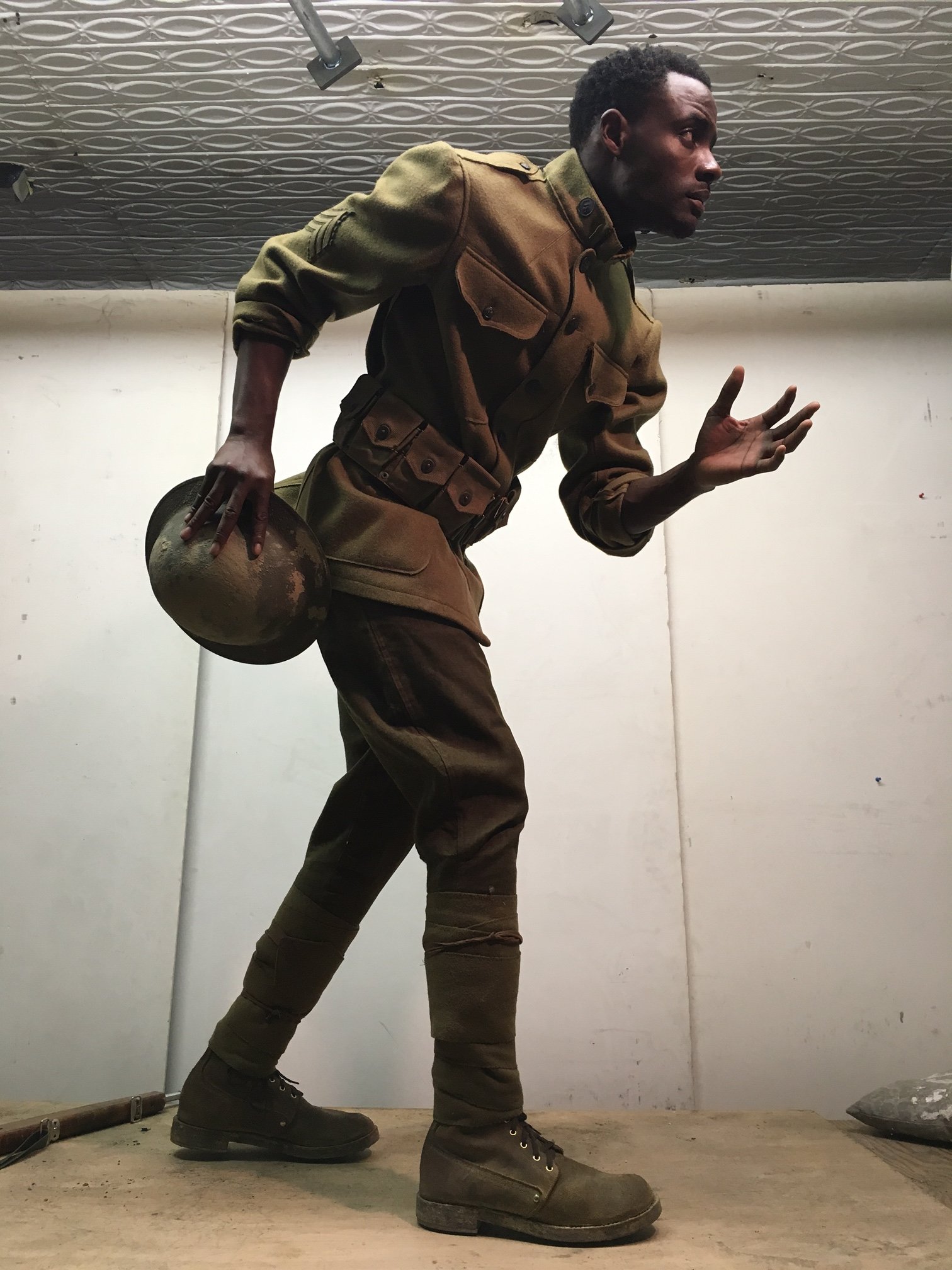
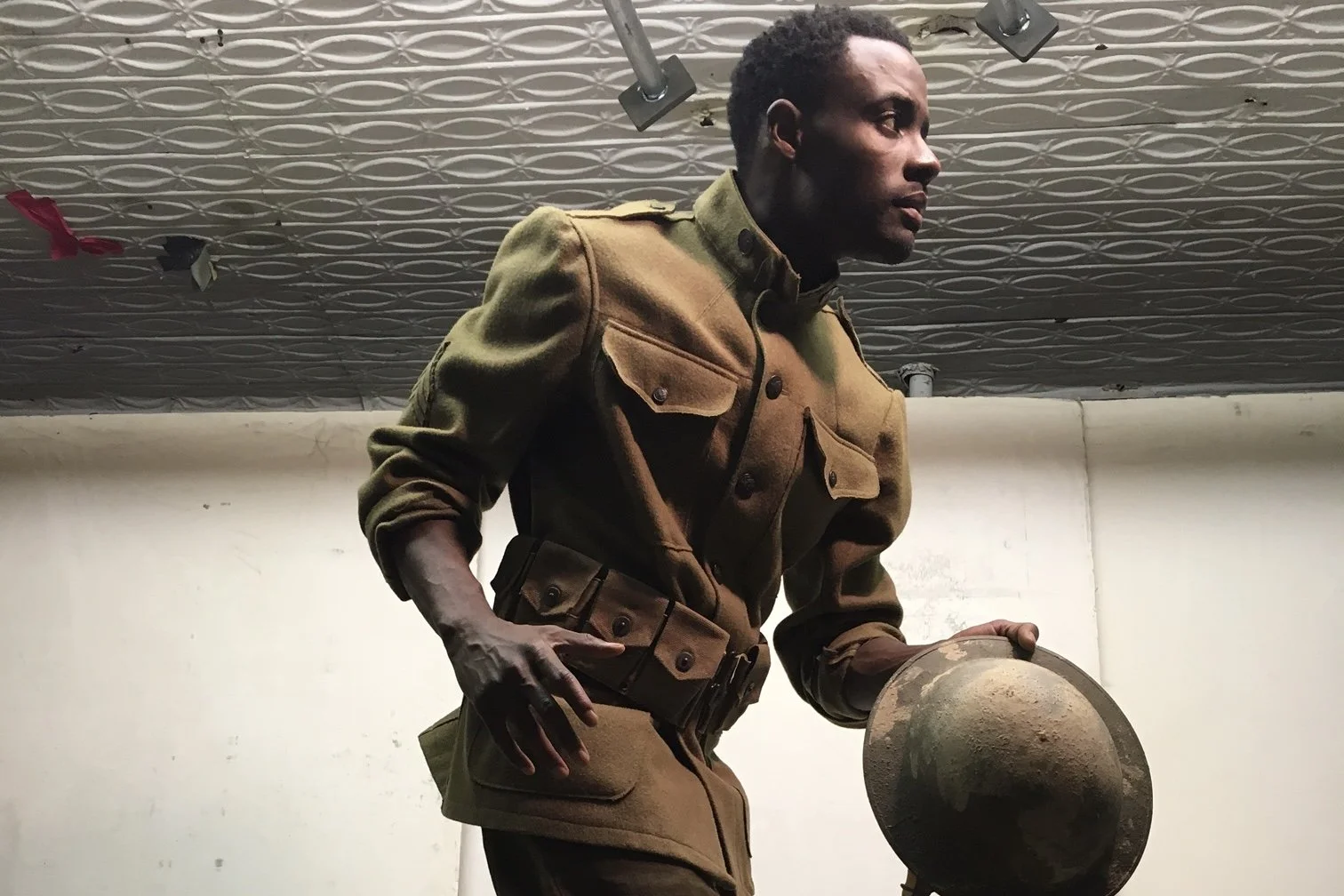
In the sessions, Rory held each position as an actor, not a form - a soldier at a specific moment, feeling something specific. He was scanned that way. Then he worked with Howard on what would survive into bronze: where the weight sat, the angle of the rifle, the expression.
He modeled three positions, here's one of the figures
How Rory Clarke Became the Model
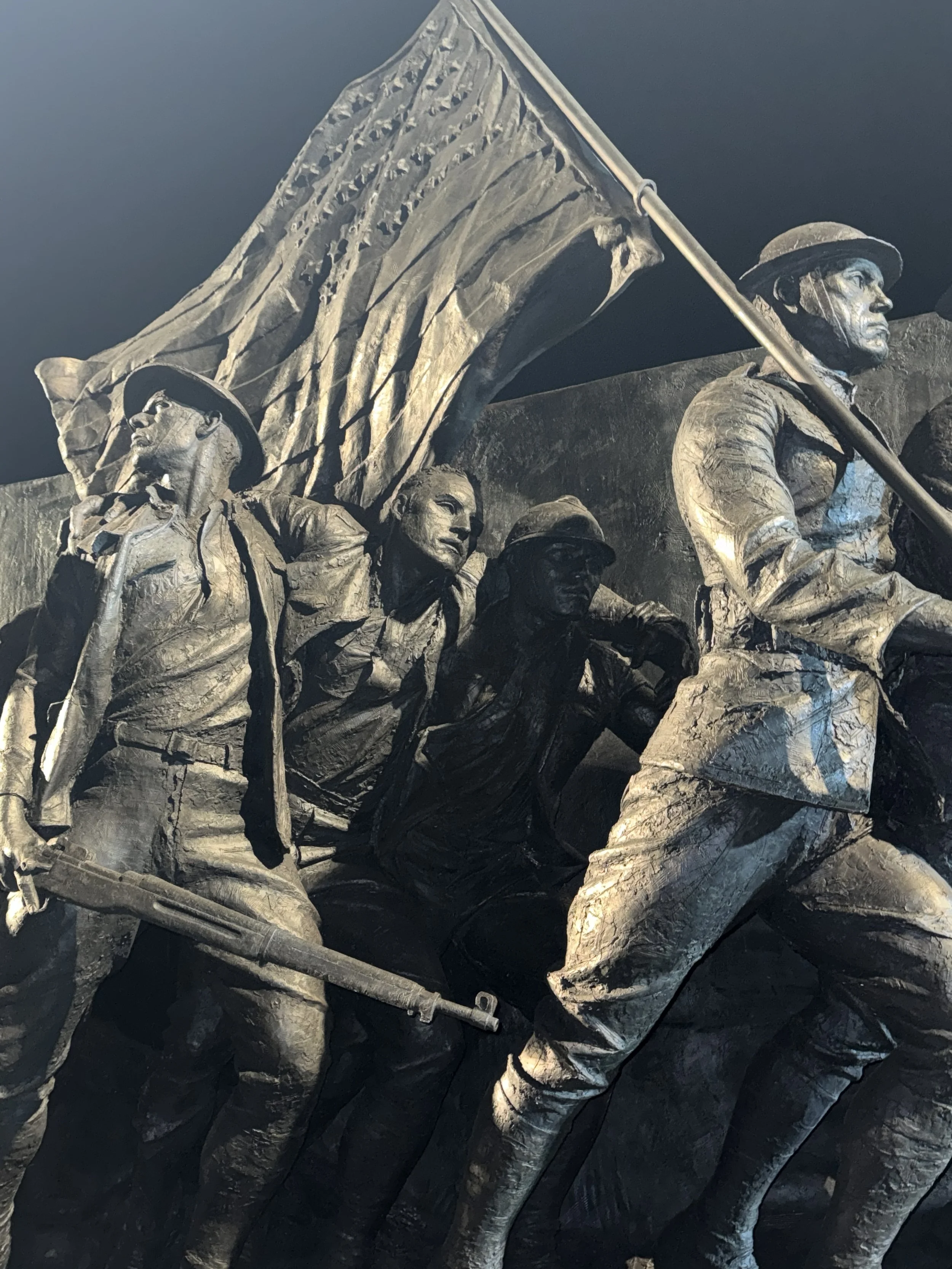
This figure has him carrying other soldiers forward. “That one was pride, belonging, brotherhood,” he says. “It was just humanity”.
Not every pose made it into the sculpture. — the poses that weren’t used are part of The Monument program.
The Film
The monument came first. The film came out of it.
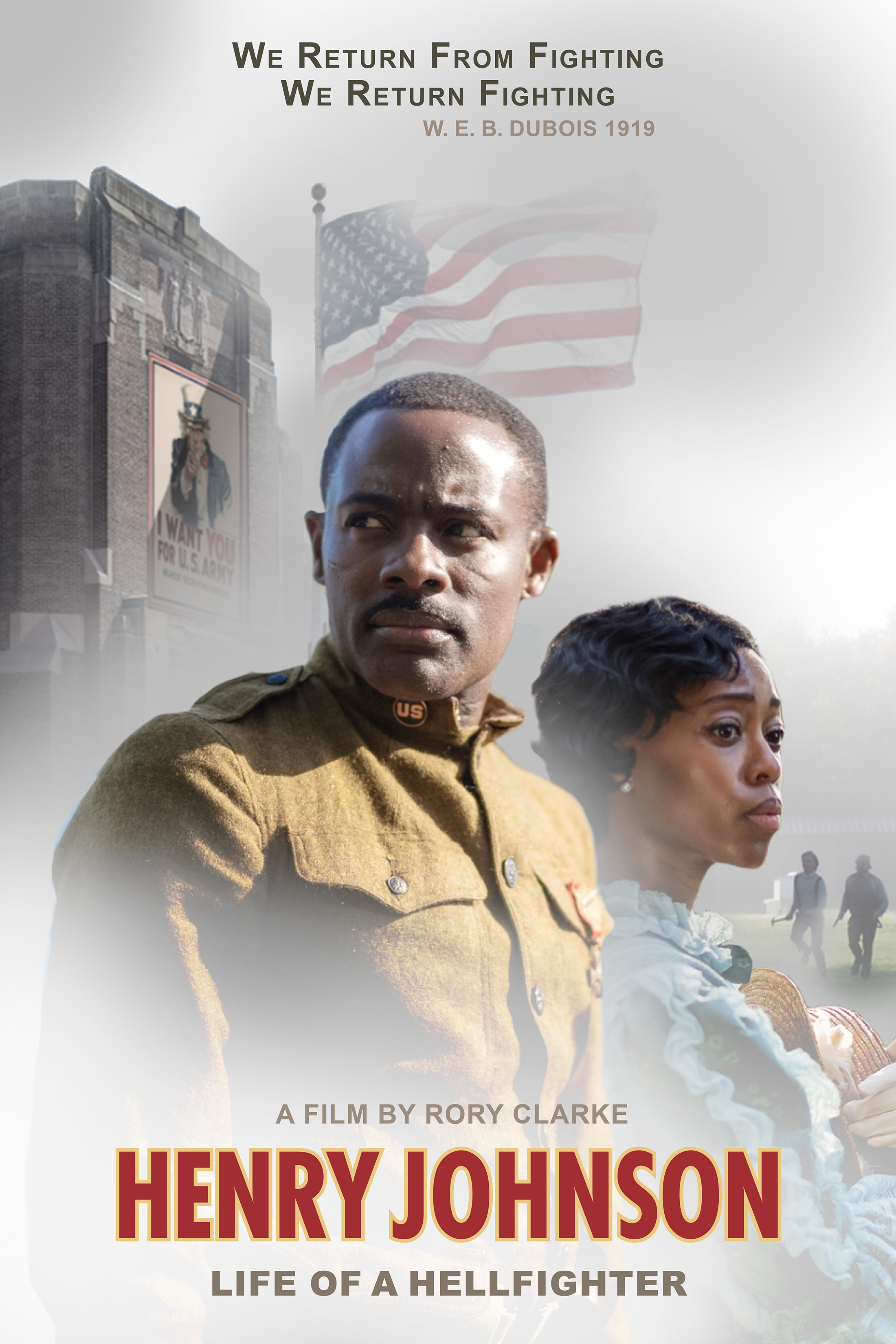
Henry Johnson is a short film written and directed by Rory Clarke, who also stars as Sgt. Henry Johnson of the 369th Infantry. The film covers: the night of May 14–15, and the homecoming. Running time, 5min, 10min, 15min, 20min and 28min. Completed 2025. “Henry Johnson” formerly titled “Blood Tax”.
From Bronze to the classroom
Rory was scanned and sculpted into a national monument.
Then he built RAC23, a film company that scans and preserves history for classrooms. Out of the production of “Henry Johnson” came a 3D and augmented reality historical model — What it depicts is the sentry post, the uniform and kit, the figure himself. Where the setting allows, that model is demonstrated live as part of the Monument program.